
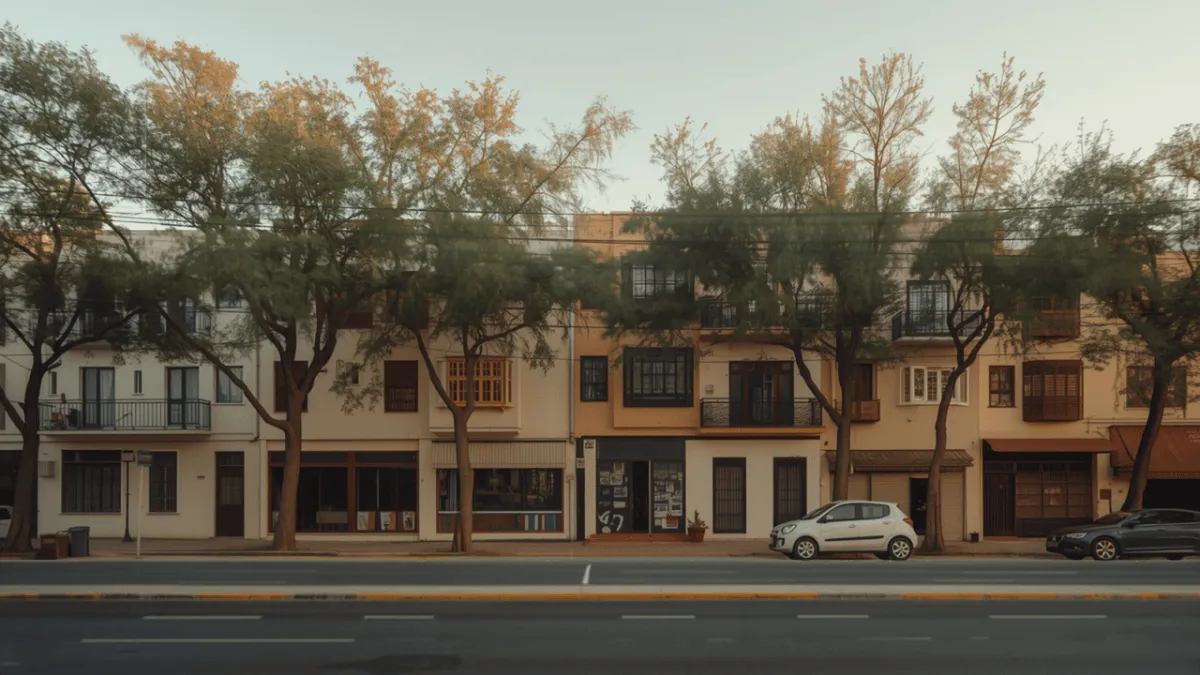
Living in Morocco as an expat is far easier to research badly than to research well. Most of what surfaces online is an invented monthly cost table, a visa summary that was accurate several years ago, and a photograph of a courtyard. This guide takes the opposite approach. It explains how the system actually works — residency, money, healthcare, language, and where foreigners genuinely end up settling — and it says plainly where you need to check the current rule yourself instead of trusting a web page. We are a Moroccan property platform, so the housing half of the question is where we can be most useful; on immigration and tax we point you at the people who decide.
What expat life in Morocco actually looks like
There is no single "expat life in Morocco" — there are at least four, and they barely overlap. A posted professional in Casablanca, a retiree on a pension in Agadir, a remote worker moving between Tangier and Marrakech, and a returning member of the Moroccan diaspora are living in different countries as far as budget, paperwork and social life are concerned. Work out which one you are before you read anyone's cost estimate, including ours.
The practical texture is Mediterranean-adjacent rather than exotic. In the larger cities you have supermarkets, fibre internet, tram and rail networks, private clinics, international schools and delivery apps, alongside weekly souks, neighbourhood hanouts open until late, and a rhythm of life that runs later in the evening than northern Europe. Friday is the pivot of the week. Ramadan reorganises opening hours and working days for a month each year, and if you have never lived through it, budget some patience for your first one.
The thing most newcomers underestimate is administrative friction. Almost nothing important is done online. Expect physical queues, photocopies, stamped documents, certified translations and repeat visits, and expect the requirement list to be interpreted slightly differently by different offices. This is not hostility, it is simply how the system runs, and people who arrive expecting a portal and an email confirmation have a harder first year than people who arrive expecting a folder of paperwork and a morning at the counter.
The compensations are real and are why people stay: a coastline on two seas, mountains with genuine winters, a short flight to most of Western Europe, food markets that make cooking a pleasure rather than a chore, and cities that are affordable enough that a modest income buys a life with margin in it.
The real cost of living: how to build a budget you can trust
We are not going to hand you a monthly cost table, because every honest version of one is out of date within a year and most of the ones you will find were never sourced in the first place. What follows is the structure of a Morocco budget — the lines it contains, which ones move, and how to price them yourself from current information rather than from someone's remembered figure.
Build it from these components, in roughly this order of impact:
- Housing. The single largest line and the one with the widest spread. Rent varies more by neighbourhood than by city — a flat in a central, well-connected district of Casablanca and a flat twenty minutes out can differ enormously. Price it by looking at what is actually listed today in the specific neighbourhoods you would accept, not at a city average.
- Service charges and utilities. Apartments in co-ownership buildings carry a monthly syndic charge covering the caretaker, lift, stairwell lighting and cleaning. Ask what it covers and whether the building's syndic actually functions. Electricity, water and internet are billed separately; air conditioning in an inland summer and heating in a mountain winter both move the number.
- Food. Two parallel markets exist. Fruit, vegetables, bread, eggs, fish and local staples bought at the souk or the neighbourhood shop are inexpensive. Imported cheese, breakfast cereal, wine and anything branded from Europe is not, and a household that shops entirely in the imported aisle can spend several times what its neighbour spends.
- Transport. Petit taxis inside cities, grand taxis between them, trams in Casablanca and Rabat, and a national rail network including the high-speed line up the northern corridor. Many expats manage without a car in Rabat or central Casablanca and find one close to essential in Marrakech's outskirts or on the coast.
- Health cover. See the healthcare section below. If you are not affiliated to the Moroccan system through an employer, private insurance is a fixed monthly line, and it rises with age.
- Schooling. For families, international or French-system school fees are frequently the largest single expense in the entire budget, larger than rent. Get current fee schedules directly from the schools you would consider before you commit to a city.
- Household help. Domestic help, whether occasional or live-in, is common and considerably more affordable than in Europe or North America. Employing someone brings obligations; take advice on doing it properly rather than informally.
The method that works: shortlist two or three neighbourhoods, price real current rentals in them, add the fixed lines above, then add a contingency for the first year specifically — deposits, agency fees, furnishing an unfurnished flat, translations, and the trips you will make before you settle. Long-stay costs and first-year costs are different numbers, and conflating them is the classic planning error.
A note on how we handle numbers here: ViewImmo does not publish cost-of-living averages, because we cannot source them. Where you see a figure on this site it comes from a property listing or from a rule we can point at. Everything else we describe as a mechanism, and tell you where to check.
Visas, residency and the question of a Morocco retirement visa
This is the section where being wrong is expensive, so read it as a map of the process rather than as the requirement list itself. Immigration rules differ by nationality, change without much publicity, and are applied by the office in front of you.
Entry, and the ninety-day habit
Citizens of many countries — including much of Europe and North America — can enter Morocco without a visa for a limited tourist stay, commonly ninety days. Some newcomers treat this as a lifestyle, leaving and re-entering to reset the clock. It is not a residency strategy: it leaves you without a legal address, without a Moroccan bank account of the useful kind, and at the discretion of a border officer each time. Confirm your own nationality's entry rules with the Moroccan consulate covering your area before you travel, and again before you decide to stay.
The residence permit (carte de séjour)
Staying beyond the permitted tourist period means applying for a residence card at the police department responsible for foreign nationals in the area where you live. In broad terms the file is built around three questions: who you are, where you live, and how you support yourself. That translates into identity documents, a proof of address tied to a lease or a title deed, evidence of means — pension statements, employment contract, business registration or bank records — plus medical and criminal-record documentation, photographs, and fee stamps. Documents in other languages generally need certified translation. Cards are issued for a fixed period and renewed.
Two things are worth knowing early. First, a lease in your own name is usually a prerequisite for the file, which is why housing tends to be sorted before paperwork rather than after. Second, requirements are applied locally, so the most reliable list is the one given to you by the specific office that will process your file — not the one on a forum.
Is there a Morocco retirement visa?
Morocco does not operate a dedicated retirement visa of the kind marketed by several other countries — there is no named retiree programme with a published income threshold and a fast-track permit. Retirees generally use the ordinary residence permit route described above, demonstrating stable pension income as their means of support. Because immigration policy is exactly the sort of thing that changes, verify the current position with the Moroccan consulate responsible for your country before making any commitment.
Searches for "Morocco retirement visa" usually reflect a different underlying worry: whether a retired person without a job offer can obtain residency at all. In practice, demonstrable and regular income is the substance of the answer, and pension income is income. What people find harder than the concept is the file itself — the translations, the address proof, the renewal cycle.
Tax, and the pension question
Once you are tax-resident in Morocco, your position is governed by Moroccan tax law and by any double-taxation treaty between Morocco and your home country, which determines who taxes your pension. Morocco's tax code has historically provided relief on foreign-source pensions that are transferred to Morocco and converted into dirhams, subject to conditions — but the rate and the conditions are set by legislation that is revised periodically, and we will not quote a percentage that may already have moved. Treat this as a question for a Moroccan tax adviser and your home tax authority, jointly, before you move money or change residence.
Nothing here is legal, immigration or tax advice, and ViewImmo does not provide any. Requirements vary by nationality and change. Confirm every point in this section with the Moroccan consulate or the relevant Moroccan authority for your own case.
Retire in Morocco: what makes it work, and what to check first
The case for choosing to retire in Morocco is straightforward and mostly geographic. A mild coastal winter, a cost base well below Western Europe, a short flight from most of Western Europe for family visits, and a time zone that keeps you in the same working day as the people you left behind. For a retiree from France, Spain, the UK, Belgium or the Netherlands, that combination is difficult to find anywhere closer.
What deserves attention before the decision:
- Healthcare access, specifically for your conditions. Not "is healthcare good" in the abstract, but whether the specialists and follow-up you personally rely on exist within reasonable distance of the city you are choosing, and what your insurance will cover at that age.
- Income durability in dirhams. A pension paid in euros, pounds or dollars is spent in dirhams. Exchange-rate movement over a twenty-year retirement is a real variable, not a rounding error.
- Renewals for the rest of your life. Residency is not a one-off. The paperwork cycle continues, and it becomes less pleasant with age. Choosing a city where the process is familiar to a local adviser you trust is worth more than a slightly nicer view.
- An exit that works. Circumstances change. Understand before you arrive how you would sell a property, move funds out, and unwind residency, rather than discovering the rules at the point where you urgently need them.
- The social question. Marrakech, Agadir and Tangier have established foreign communities. Smaller inland cities do not, and if you neither speak French nor intend to learn Darija, isolation is a genuine risk that no amount of sunshine fixes.
Retiring in Morocco: pros and cons, honestly
Every guide on this topic lists the advantages. Here are both columns, written as though you were asking a friend who lives here rather than reading a brochure.
What genuinely works
- Cost of living well below Western Europe and North America, with the gap widest on housing, produce, eating out and services.
- Climate: mild Atlantic winters on the coast, real seasons inland, and mountains within a few hours of most cities.
- Proximity to Europe — short flights, ferry links from the north, and no punishing time difference for calls home.
- Foreign nationals can normally buy property in their own name without residency, which keeps housing options open.
- Cities with functioning infrastructure: private clinics, fibre internet, rail, trams, international schools.
- Everyday hospitality that is not a tourism-brochure claim; neighbourhood life is sociable and doors open quickly.
What people struggle with
- Bureaucracy is paper-based, in-person and repetitive, and instructions vary between offices.
- Without French — or Darija — daily administration, medical appointments and rental negotiations get materially harder.
- Summer heat inland is severe. Marrakech, Fes, Meknes and Béni Mellal in July and August are not for everyone.
- Healthcare quality is uneven: strong private clinics in the big cities, thinner provision in smaller ones.
- Currency and transfer rules mean moving money out later requires documentation you should be creating from day one.
- Owning property grants no residency rights, and the two processes have nothing to do with each other.
- Rental markets are informal in places; leases, deposits and repairs are often settled by relationship rather than by contract.
- Driving culture and traffic in the large cities is an adjustment, and one that some people never make.
The honest summary: Morocco rewards people who arrive adaptable and prepared to learn some language, and frustrates people who expect a Mediterranean version of home at lower prices. Both types move here. Only one type is still here in five years.
Best place to retire in Morocco: the cities compared
There is no single best place to retire in Morocco, but there is a best place for a given set of priorities. The trade-off is almost always between medical access and services on one side, and cost, calm and character on the other. These are the cities ViewImmo covers, grouped by the kind of life they suit.
Living in Casablanca as an expat
Casablanca is the economic capital and the default for anyone moving for work. It has the deepest job market, the widest range of private medical care, the largest choice of housing at every level, an airport with direct long-haul routes, and a tram network that makes parts of the city genuinely car-optional. It is also loud, dense and traffic-bound, and it is a working city rather than a picturesque one. People who love Casablanca love it for the same reason they love any big city: everything is there. People who leave usually leave for calm.
Rabat
The administrative capital, and the quiet counterweight to Casablanca an hour up the coast. Ministries, embassies and universities give it a settled, institutional character, good schools, wide green streets and a beach and river frontage. It is the city most often recommended to families and to retirees who want services without intensity. Rents reflect that reputation.
Marrakech
The largest concentration of foreign residents in the country, and the easiest place to build a social circle in French or English quickly. The split matters: living inside the medina in a riad is a specific, high-maintenance choice, while the newer districts function like ordinary modern suburbs with gated residences and apartment blocks. The summer is the honest objection — inland heat that runs for months and drives many residents to the coast.
Tangier
Northern, Mediterranean-facing, and closer to Spain than to Rabat. The port, the free zones and the high-speed rail link have made it the fastest-changing city in Morocco, which means new housing stock and a working local economy rather than a seasonal one. Spanish is widely useful here, the summers are milder than inland, and the ferry makes Europe a day trip rather than a flight.
Agadir
The most straightforwardly retirement-friendly city in the country, and the one most often overlooked in English. Rebuilt on a flat modern grid after the 1960 earthquake, it is walkable in a way medina cities are not, has a long Atlantic beach, the mildest winter of the major cities, and an established community of long-stay European residents. Prices sit below Marrakech for comparable space, and the airport has good seasonal European connections.
Essaouira, Ifrane and the smaller options
Essaouira is a small, walkable, wind-cooled Atlantic town with a strong artistic identity and a loyal foreign minority — wonderful for six months of quiet, limited for serious medical needs. Ifrane sits in the Middle Atlas with cold, sometimes snowy winters and a university-town atmosphere, and suits people escaping heat rather than seeking sun. Fes and Meknes offer the deepest historical fabric and the lowest costs of the imperial cities, with correspondingly less foreign infrastructure. Béni Mellal, inland at the foot of the Atlas, is a functioning Moroccan provincial city with very few foreigners and prices to match.
The Casablanca coast: Mohammedia, Bouznika, Dar Bouazza and El Jadida
The strip between Casablanca and El Jadida deserves more attention than it gets from foreign buyers. Mohammedia, Bouznika, Dar Bouazza and El Jadida each offer beach living within commuting or weekend distance of Casablanca, at a fraction of the density. It is where a lot of Casablanca residents actually go at weekends, which tells you something. El Jadida adds a Portuguese-era fortified quarter and a genuine town life of its own rather than being purely residential.
ViewImmo covers these cities across Morocco, at every price level rather than the top of the market only:
- Casablanca
- Marrakech
- Rabat
- Tangier
- Fes
- Agadir
- Essaouira
- Bouznika
- Dar Bouazza
- Mohammedia
- Ifrane
- El Jadida
- Meknes
- Béni Mellal
Healthcare, language, money and the daily practicalities
Healthcare
Morocco has a public system alongside a substantial private sector of clinics and independent practitioners. Foreign residents in employment are generally affiliated to the national scheme through their employer; everyone else typically carries private cover, either an international policy or a Moroccan one. The practical reality is that quality and specialisation concentrate in Casablanca and Rabat, with strong provision also in Marrakech, Tangier, Fes and Agadir, and thinner coverage in smaller towns. Pharmacies are plentiful, well stocked and a first port of call for minor issues. Before choosing a city, check specifically that the care you rely on exists nearby — and confirm what your policy pays for, and at what age it stops renewing.
Language
Arabic and Amazigh are the official languages; the spoken everyday language is Moroccan Darija, and Tamazight varieties are widely spoken. French runs through business, administration, higher education and signage, and is the language most foreign residents actually function in. Spanish is common in the north, and English is growing among younger urban Moroccans and in tourism. The realistic advice: French will carry you through daily life almost anywhere, and a few hundred words of Darija changes how you are treated in markets, taxis and your own building more than any other single investment you can make.
Banking and moving money
The dirham is not freely traded outside Morocco, and inflows and outflows are governed by exchange-control rules. The practical consequence for anyone relocating is a documentation habit: keep the paperwork for every transfer you bring in, because it is what supports moving funds back out later — including the proceeds of selling a property. Non-residents can generally open accounts designed for foreign-currency inflows; ask your bank precisely which account type preserves transferability before you open one, not after. The Office des Changes is the authority that sets these rules.
Connectivity, driving and the small stuff
Mobile data is cheap and coverage is good; fixed fibre is available in the main urban areas and patchy outside them, which matters if you work remotely. Driving licences from many countries can be exchanged within a period after taking up residence — check the current rule and the deadline, because missing it means sitting the Moroccan test. Importing a car and importing household goods both have their own customs regimes, with different treatment depending on your status; get advice before shipping anything.
Renting first, then buying property in Morocco as a foreigner
The advice we give most often to people relocating is the least exciting: rent for a year before you buy anything. A twelve-month lease costs you far less than a wrong purchase, and it teaches you the things no listing shows — the traffic bottleneck between you and the school, whether the neighbourhood is lively or empty in winter, how the building behaves in a heatwave, whether the syndic actually fixes the lift. Long-term residential leases here are typically annual, renewed, with a deposit and a written contract; ask who is responsible for which repairs and get it into the contract rather than the conversation.
When you are ready, buying property in Morocco as a foreigner is more open than newcomers expect: foreign nationals can normally purchase urban property in their own name, without residency and without a local partner, with agricultural land as the standard exception. The mechanics — the notary's role, the preliminary agreement, the transaction costs, the registration — are a separate subject in their own right, and we have written them up in full in our guide to buying property in Morocco as a foreigner. Read that before you make an offer on anything.
Two things trip people up, and both are worth repeating: buying property does not grant residency, and residency is not required to buy. They are entirely separate processes handled by entirely different authorities.
Choosing a home from another country: why the 360° tour matters here
Relocating is the situation the virtual tour was invented for. You are choosing where you will live from a thousand miles away, off photographs a landlord or agent selected, and you probably get one scouting trip — a week, maybe two, to see everything and decide.
Every property listed on ViewImmo includes an embedded 360° virtual tour on its page. You move through the space yourself, in your own order, looking up at the ceiling, out of each window and down the corridor the photographer chose not to shoot. That is how you catch the room that borrows all its light from another room, the terrace that faces a wall, or the layout that looks generous in a wide-angle photo and is not. Our team visits and photographs each property before it goes live, so the tour is of the actual unit rather than a show flat.
This does not replace seeing a place in person before you sign. What it replaces is the wasted half of your scouting trip. Instead of viewing eight homes and rejecting five in the first ninety seconds, you arrive with a shortlist of three that genuinely deserve your time. If you want the detail of how we produce those tours and what else we do for buyers, sellers and agencies, it is set out on our ViewImmo services page, including 360° virtual tour production, and the step-by-step version is on how the process works with ViewImmo.
Living in Morocco as an expat: where to start
A workable sequence, in order: pick two cities rather than a country; price real current rentals in the specific neighbourhoods you would accept; get your nationality's entry and residency requirements directly from the Moroccan consulate that covers you; price health cover at your actual age; then visit for at least two weeks outside peak tourist season, ideally including part of a summer or a winter so you meet the climate at its least flattering. Only after that should you think about buying.
The move works well for people who treat it as moving to a country rather than extending a holiday — who learn some of the language, budget for the first year honestly, and choose a city for its healthcare and connections rather than its photographs. Get those three right and the rest is detail. The Moroccan Ministry of Foreign Affairs is the starting point for consular and entry information; for the property side of the move, we are a message away.