
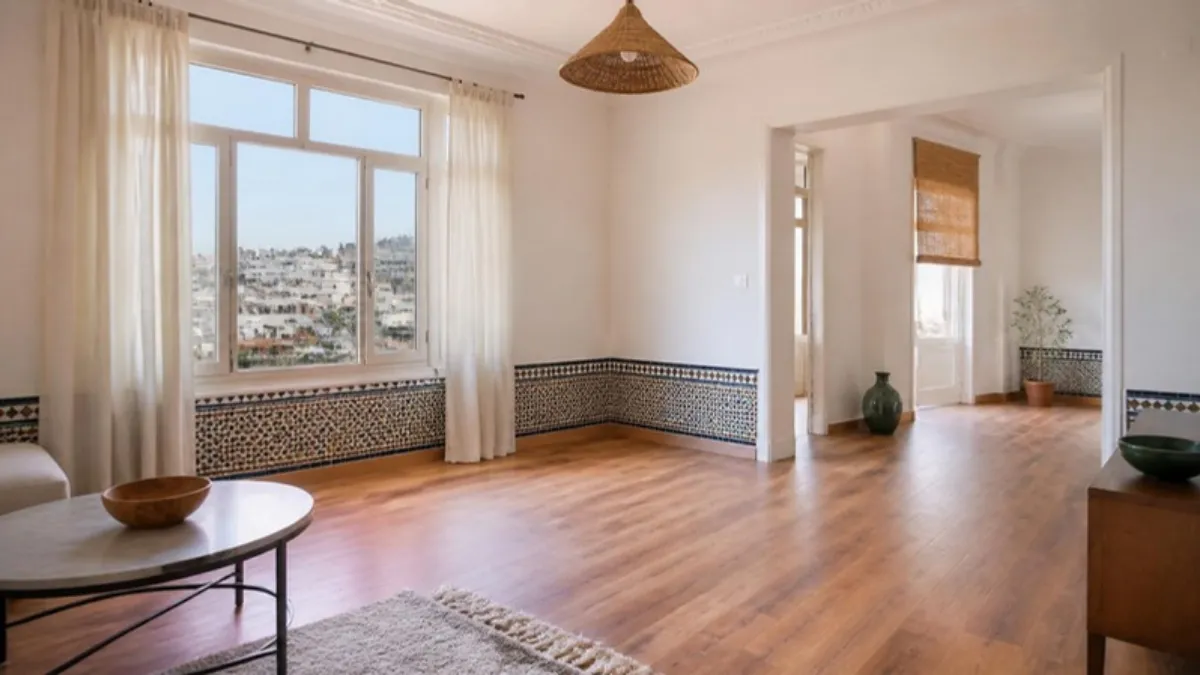
Property valuation in Morocco starts from one fact: your home is worth what a serious buyer will agree to pay, not the figure on a neighbour's listing. The reliable way to find that price is to compare recent sales of similar properties in your own neighbourhood, adjust for what makes yours different, cross-check the result with one or more professional opinions, and turn it into a price range rather than a single number. This guide explains who can value a property, where the price-per-m² figures you come across actually come from, what drives value beyond surface area, and a method you can follow before you list.
Who can value a property in Morocco
Four kinds of opinion are open to a seller. They are not interchangeable: each one sees a different part of the picture, and each suits a different moment in the sale.
An estate agency's estimate
An agency that works your neighbourhood sees which properties attract visits and offers, and at what level. Its estimate is usually the quickest professional opinion you can get. Keep in mind that an agency valuing your property also hopes to be chosen to sell it, so ask how the figure was reached: which comparable properties, sold when, and adjusted for what. An estimate that cannot be explained with comparables is an opinion, not a valuation.
An online estimation tool
Online estimators ask for the city, the district, the type of property and the surface area, and return an indicative range. They are useful for a first order of magnitude, and for checking whether your own expectation is far off. They cannot see the state of your kitchen, the light in the living room, the noise from the street or the upkeep of the building, so treat the range as a starting point, never as a price.
An independent valuation expert
An independent expert inspects the property and produces a written, reasoned report. It is a paid service and takes longer than the other options, so it makes most sense when a figure has to hold up: an unusual property with few comparables, such as a riad, a large villa or a plot of land; a sale between heirs or co-owners who need a figure they can all accept; or any situation where you want a documented basis for your price. Before you commission one, ask which method the expert uses, which professional standards they follow and what the report will contain.
What the notary does, and does not do
In a Moroccan sale, the notary drafts the deed, checks the property's legal documents and handles the formalities of the transfer. The notary does not set your price: seller and buyer agree on it between themselves. A notary who handles sales in your area can still be a useful sounding board on whether your figure is in line with the local market, and can explain how the tax administration's price references apply to your property. For any legal question about your sale, ask a notary directly.
| Source | What you get | Most useful when | Main limit |
|---|---|---|---|
| Estate agency | A market opinion based on local activity | You want a quick professional view | May lean optimistic to win the mandate |
| Online tool | An indicative range | You need a first order of magnitude | Cannot see condition, view or building |
| Independent expert | A written, reasoned report | The property is unusual or the figure must be shared | Paid and slower |
| Notary | Legal checks and the deed, not a price | You are preparing the sale and want a local sounding board | Does not value the property for you |
Where price-per-m² figures come from, and why they differ
Ask five people what a square metre is worth in your neighbourhood and you may get five different answers. That is usually not because someone is wrong, but because each figure comes from a different source and answers a different question.
Recent sales of comparable properties
This is the most relevant evidence: the price actually agreed for properties like yours, in the same neighbourhood, over recent months. It is also the hardest to collect. You will usually gather it by asking agents and notaries active in the area, and anyone you know who has recently bought or sold nearby.
The official property price index
Morocco publishes an official real-estate asset price index (IPAI). An index measures how prices move over time, so it helps you understand the direction of the market. It is an average across many different properties, though: it describes the market as a whole, not the value of your apartment.
The tax administration's price references
The Direction Générale des Impôts (DGI) publishes real-estate price references on its website, tax.gov.ma. They are references published by a tax authority, not a market valuation of a specific property. Do not read them as what your home is worth; ask your notary how they apply to your property and neighbourhood.
Asking prices on listing portals
Listings show what sellers hope to get, not what buyers paid. An asking price can sit well above the eventual sale price, and a listing that has stayed online for months may simply be overpriced. Portals are still worth studying, because they show the competition a buyer will compare you with.
The practical rule: a national average is not a property-level value, and an asking price is not a sale price. Give most weight to recent sales nearby, and use the other sources as context.
What drives a property's value beyond surface area
Two apartments of the same size in the same street can be worth quite different amounts. Go through this checklist with the honest eye of a buyer, noting where your property is stronger or weaker than the comparables you found.
- Location and neighbourhood: the exact street and building, not only the district; access to schools, transport, shops and services; noise and traffic; how buyers perceive the area.
- Surface area, measured properly: check that the surface you quote matches your title documents, and keep living area separate from terraces, balconies and shared spaces.
- Condition and renovation needs: the state of the kitchen, bathrooms, electrics, plumbing, windows and finishes. Buyers take into account the cost and disruption of any work they will have to do.
- Floor, lift, light and view: a high floor without a lift, a dark ground floor or an open view each change how a buyer values the same surface area.
- Parking and outdoor space: a parking space, a garage, a terrace, a garden or a roof terrace.
- Building and common areas: the upkeep of the building, the lift, security, how well the co-owners' association (the syndic) is run and whether major works are planned.
- Legal status: whether the property is registered with the land registry (ANCFCC) under its own title, whether charges such as a mortgage are recorded against that title, the co-ownership situation, and whether several heirs or co-owners must agree to the sale. Any doubt about the title is a risk the buyer will either price in or walk away from, so resolve it with a notary before you list.
A five-step method to set your asking price
- Gather comparables. Look for several properties of the same type and similar size, in the same neighbourhood, sold recently. For each one, note the price, the surface area, the floor, the condition, parking and outdoor space. Where you only have asking prices, keep them in a separate column.
- Adjust for the differences. Compare each property with yours, point by point, using the checklist above, and move your estimate up or down accordingly. Be as honest about your property's weaknesses as about its strengths.
- Cross-check with professional opinions. Ask one or more agencies active in the area, and a notary if you can, for their view, and compare their reasoning rather than just their figures. If the opinions are far apart, ask each one to justify theirs with comparables. For an unusual property, consider an independent expert.
- Set a range, not a single number. Fix three figures before you list: the asking price you will publish, the price you realistically expect to reach, and the lowest price you would accept. Deciding the floor in advance keeps you from negotiating it under pressure.
- Revisit if the property draws no serious interest. Views but few visit requests, or visits but no offers, are information from the market. Decide in advance when you will review, then look again at both the presentation and the price.
Presentation: letting buyers see what justifies your price
A realistic estimate still has to be defended in front of buyers. Condition, light, layout and view, the very factors that set your property apart from the neighbourhood average, are exactly what a buyer cannot judge from a surface area and a price. Clear photos show them. A 360° virtual tour goes further: a buyer can move from room to room, check the layout and see the condition for themselves, from wherever they are.
That matters most for buyers who cannot easily visit: Moroccans living abroad (MRE), and buyers based in another city or country, who can assess the property before deciding whether to travel for a viewing. Our guide on how to buy property in Morocco shows the sale from their side, and seeing the property properly is where it begins. A tour does not change what your property is worth; it lets buyers see what it is.
Once you have your price range, book a 360° virtual tour of your property so buyers in Morocco and abroad can see its real condition before they visit.